

COURSES ▶ SEMINAR
Your Feelings Matter Too: Effective Use of Countertransference in Formulation and Treatment
Remember when you ended a session irritated, or bored, or unaccountably tender toward someone you've known for three weeks. Was that useful clinical data, or was it something to be managed?

Friday, November 13th, 2026
3pm-6pm PST
Live Online Seminar through Zoom
Instructor:
Trevor M. Ahrendt, PsyD
Depending on which tradition you came up in, that feeling is either the most important data in the room or a distraction from the actual work. This is one of the many splits and confusions in our field that confuse therapists and hurt patient care. So what do we do about counter-transference?
Though some schools of psychoanalysis have matured into focusing on "intersubjective" aspects of therapy, many still treat it as treatment "contamination." Much of the empirical literature has spent decades treating it as therapist error to be minimized. Some manualized approaches barely discuss it at all, and a few treat sustained attention to it as self-indulgent, even iatrogenic. To make matters worse, there isn't even widespread agreement about how to define the term!
This course will begin with a historical survey of the concept of counter-transference, how it's evolved, and the lines of the competing definitions. We'll look at where the classical, totalist, and relational definitions actually diverge, what the process and outcome research does and doesn't support, and how models like Control Mastery Theory and Experiential Dynamic Therapies put therapist reaction to work inside case formulation rather than leaving it as private experiences to be managed. Substantial attention goes to the practical problem underneath all of it: how to examine your own reactions with enough honesty to learn something about the person you're working with, and practical steps to integrate it into the formulation. Critically, we'll integrate socio-cultural factors, reactions, and ideas to help refine the formulation process and make it more nuanced and attentive to patient experiences. Finally, we'll spend time reviewing case material to see how this looks in practice.
You'll leave with a working sense of when your reaction belongs in the room, when it belongs in consultation or your own therapy, and when the honest answer is to set it down and get back to work.
This course will cover
Apply Relational Psychotherapy models to understanding how to utilize countertransference in case formulations
Contrast multiple historical ideas and attitudes towards psychotherapists’ understanding of countertransference and its utility in psychotherapy.
Assess barriers to understanding and applying one’s own countertransference to improve clinical outcomes.
Course Outline
I. Introduction and Outline (15 min, 15/180)
Welcome
Inclusion Statement
Outline of course
Opening Experiential
II. History of Countertransference (15 Min, 30/180)
1900s
1950s
1980s – Current
Current Definitions and Disagreements
III. Current Research (30 min, 60/180)
Meta-Analyses
Theoretical Papers and Thought
IV. Current Theories on Utilizing CT (50 min, 110/180)
Control Mastery Theory
Brief Dynamic Theories
Time Limited Dynamic Therapy
V.Self-Reflective Practice (30 Min, 140/180)
How to identify your own CT more effectively
Barriers for therapist to know and utilize CT
CT in reaction to Personality VS CT in reaction to Content
Cultural Humility and CT
Understanding how identity may shape CT
Understanding how this may shape treatment
When to address directly and when not to
VI. Case Examples and Practice (30 min, 170/180)
Film Review, Discussion, and Formulation Practice
VII. Discussion/Questions/Overflow (10 min, 180/180)
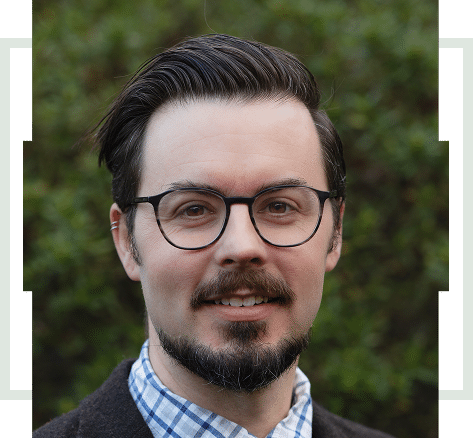
Trevor M. Ahrendt, Psy.D., is a Licensed Clinical Psychologist in private practice in San Francisco, where he sees adults and provides individual and group case consultation on Zoom and in SF. He is the co-founder and head clinical supervisor of The San Francisco Therapy Group. He received his doctorate from The Wright Institute in Berkeley, CA. He serves on the board of the San Francisco Psychotherapy Research Group and previously on the board of the Northern California Group Psychotherapy Association.
A lifelong student of both therapy and personal transformation, he has studied across most major modern theories, lived and practiced in a Zen residential center, and taught more than 100 continuing education courses over the past decade. Dr. Ahrendt has provided trainings to organizations and clinicians on addiction, the therapeutic relationship, and mindfulness in therapy.
He is particularly passionate about teaching Control Mastery Theory, a poorly named but incredible theory that offers a truly unifying, trans-theoretical understanding of the therapeutic process. He has presented on resolving conflicts in the therapeutic field and the value of an examined life.
You can find him and his cardigan collection on Instagram @SFTherapyGroup, or join his group’s mailing list at www.sftherapygroup.com/email-signup/
After completing this workshop, participants will be able to:
Assess personal and theoretical barriers to recognizing and using one's own countertransference in treatment.
Course Level: Intermediate
CME Credits: SFPRG designates this for a maximum of 3 AMA PRA Category 1 Credit(s)™. Physicians should claim only the credit commensurate with the extent of their participation in the activity.
SFPRG is accredited by the California Medical Association (CMA) to provide continuing medical education for physicians.
All planners and all presenters for this educational activity have no financial relationship(s) to disclose with ineligible companies whose primary business is producing, marketing, selling, re-selling, or distributing healthcare products used by or on patients.
CE Credits: 3 APA-approved CE hours. If you would like CEUs, you should indicate so during registration. COAs will be sent within 30 days of the class. You must arrive on time for the course and stay for the entirety of the program to receive CE credit.
Cost: $150 for General Public
$100 for SFPRG Members
$30 for Students (No CEU's or CMEs)
The Personalized Psychotherapy Institute (PPI) is the education wing of the San Francisco Psychotherapy Research Group (SFPRG)



registrations
Course Schedule: If you would like know more about the schedule for this event please contact our front office at cmt@sfprg.org or 415-561-6771
Cancellation Policy: No refunds are provided for this event. If you have questions about your registration, please contact our office at cmt@sfprg.org 415-561-6771
Co-sponsorship: There is no co-sponsor of this event.
Commercial Support: There is no known commercial support for this program.
Please note that registrations for all PPI classes are handled by the website of our parent member organization SFPRG. You will be redirected to that website to complete your registration. You need not be a member to register, however, if you are a member or have registered for one of our classes before, you will be prompted to enter your information.